






The Luminescent Home: Designing Your Space for Circadian Harmony
When we think about interior design or creating a healthy home environment, we focus heavily on air quality, pure plant-based materials, and ergonomic furniture. We organize our spaces to look beautiful and feel organized. However, there is an invisible element flowing through your home that shapes your biology every second your eyes are open: The Spectral Environment. For thousands of generations, human physiology evolved under a single, perfect light source—the sun. Our bodies learned to read the shifting angles and changing color spectrum of daylight to synchronize our internal biological clocks. In the modern world, we spend over 90% of our lives indoors, trapped under static, hyper-bright overhead fluorescent or LED lights. This constant, artificial environment sends conflicting signals to our brain, leading to chronic circadian disruption. Cultivating a true healthy lifestyle requires moving beyond basic home layout and actively designing a living space that honors your natural circadian rhythms.
The Suprachiasmatic Nucleus: Your Internal Master Clock
Deep inside your brain sits a tiny cluster of cells called the Suprachiasmatic Nucleus (SCN). The SCN acts as the master conductor of your entire biological clock, regulating everything from your body temperature and digestion to cellular repair and hormone secretion.
- The Light Pathway: Your SCN doesn't read the time by looking at a wrist watch; it relies entirely on data sent from specialized receptors in your eyes called Intrinsically Photosensitive Retinal Ganglion Cells (ipRGCs).
- The Sensory Input: These specialized cells are highly sensitive to a specific, narrow band of high-energy visible light—specifically blue light (460-485nm). When blue light strikes these cells, it tells your master clock that it is the middle of the day, immediately halting the production of sleep hormones and ramping up your active morning energy.
The Overhead Trap: Understanding Light Angle
It isn't just the color of the light that signals your brain; the physical direction and angle of the light source play a massive role in your nervous system's response.
- The Solar Blueprint: In nature, high-intensity blue light only comes from directly overhead when the sun is at its zenith during midday. Conversely, low-intensity warm light comes from a low horizon angle during sunrise and sunset.
- The Modern Confusion: Our eyes are physiologically designed to look for this pattern. The ipRGC receptors that communicate directly with your master clock are densely packed in the lower half of your retina, specifically positioned to catch light streaming down from above. When you keep bright, white overhead recessed ceiling lights turned on at 9:00 PM, you trick these lower retinal receptors into thinking the midday sun is blazing, throwing your entire evening rhythm out of alignment.
The Blue Light Spillover and Melatonin Suppression
When your living space remains illuminated with cool, bright white artificial light after twilight, your body experiences a silent biological shift: the suppression of melatonin.
- The Sleep Architecture: Melatonin is the master molecule responsible for preparing your body for deep, restorative sleep and initiating internal cellular cleanup.
- The Suppression Reality: Exposure to standard overhead LED or smartphone lighting in the evening can delay your natural melatonin release by several hours. Even if you manage to fall asleep, your sleep architecture will be fractured, depriving your brain of the deep, slow-wave states needed to process memory and clear out metabolic waste.
Crafting a Circadian Lighting Strategy
Transforming your home into a supportive circadian environment doesn't require living in total darkness after sunset. It simply means aligning your indoor lights with the rhythm of the earth:
- The Daylight Surge: During the first half of the day, flood your home with high-intensity, bright light. Open your curtains completely or utilize full-spectrum daylight LED bulbs overhead to mimic the natural sky. This strong morning anchor sharpens your mental focus, balances your mood, and sets a clean countdown timer for your evening wind-down.
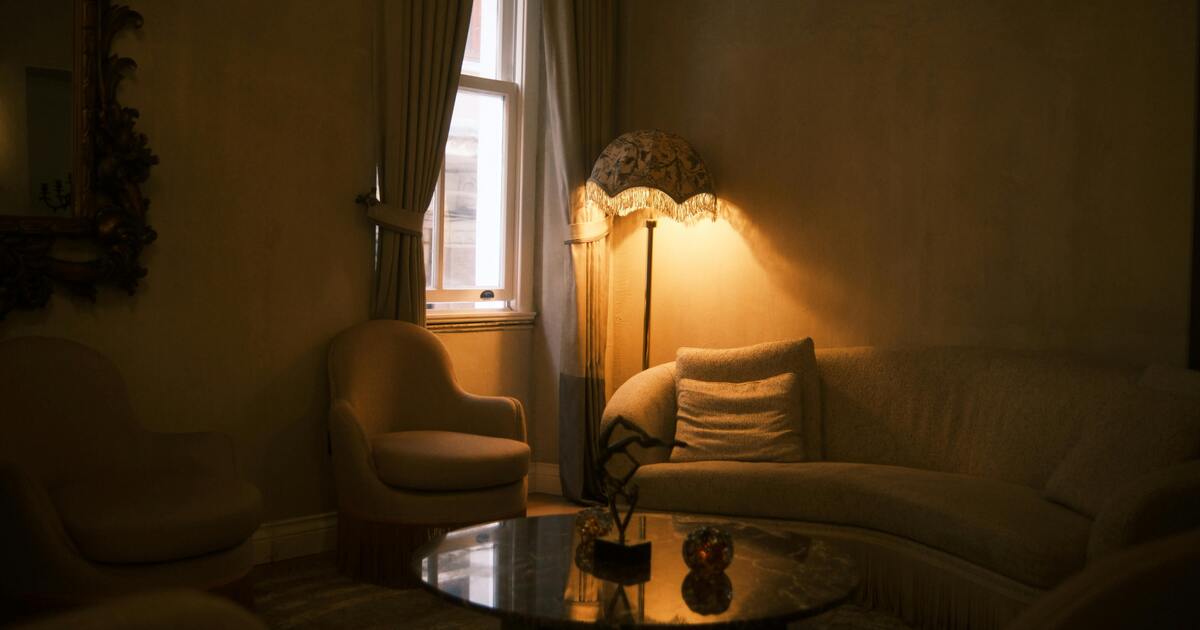
- The Twilight Shift: As the sun goes down, transition your home to a low-horizon lighting scheme. Turn off all overhead fixtures and rely exclusively on floor lamps, low-placed table lamps, or under-cabinet accent lights. Ensuring that light enters your eyes from a low physical angle prevents the activation of those sensitive retinal receptors.
- The Amber Horizon: Swap out cool white bulbs in your evening spaces for warm, amber, or incandescent bulbs (2200K or lower) that emit zero blue light wavelengths. This deep, warm glow mimics the soft light of a campfire, allowing your brain to naturally produce the melatonin required for effortless transitions into sleep.
Conclusion
Your home should be a sanctuary that repairs and restores your physiology, not an artificial landscape that keeps your nervous system in a perpetual state of midday alertness. By understanding the science of circadian lighting and consciously managing the spectrum, intensity, and angle of the light inside your space, you build an environment that works in perfect harmony with your DNA. Turn down the overhead glare, bring your light down to earth, and let your body remember its natural rhythm.